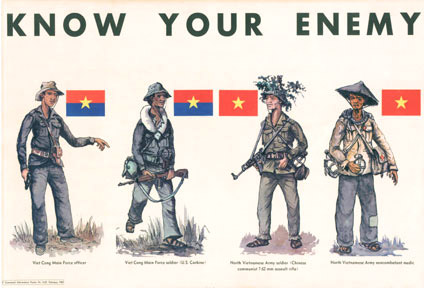
VFAF - Understanding America's Enemies:
Under the CCP/PLA “Three Warfares” (三战) framework, the goal isn’t just to “promote China.” It’s to shape the information environment so rivals waste energy fighting each other, lose trust in institutions, and become easier to pressure.
In plain English, the “divide American politics” part tends to map like this:
1) Public Opinion Warfare (舆论战) This is about controlling narratives. In a U.S. context, it often looks like amplifying the most polarizing stories and identities so Americans start viewing each other as enemies. The mission objective is less “convince everyone China is good” and more “make Americans distrust each other and their media.”
This also overlaps with classic Alinsky-style polarization tactics: isolate targets, freeze them, personalize conflict, and keep pressure on. The point isn’t persuasion—it’s social friction. And one of the most effective ways to do that is to have Americans do it to each other while believing they’re acting independently.
2) Psychological Warfare (心理战) This targets emotions and confidence: fear, humiliation, anger, cynicism. A divisive effect is created by pushing content designed to make people feel the system is rigged, elections are illegitimate, or that violence is inevitable. The payoff is political paralysis and social instability.
This is where agents, cutouts, and infiltrators matter. A sophisticated influence mission doesn’t need to control millions of people—it needs to steer a few loud nodes inside existing factions. The psychological warfare goal is to identify and cultivate highly motivated repeaters: people who are angry, unstable, poorly informed, or operating from personal grudges, revenge narratives, or a need for attention.
Those people don’t need to be “recruited” formally. They can be nudged into becoming useful idiots—individuals who sincerely believe they’re fighting for justice while they unknowingly repeat a script that accelerates division. Psychological warfare thrives on people who:
don’t fact-check,
don’t understand how propaganda works,
have personal vendettas,
crave status inside a movement,
or are emotionally addicted to outrage.
The tactic is simple: feed them content that validates their anger, gives them enemies, and rewards escalation. They then become organic amplifiers who do the warfare for free.
3) Legal Warfare (法律战) This is using law and legal narratives as a weapon. In U.S. political division terms, it can mean exploiting free speech, litigation, regulatory gaps, or procedural norms so hostile influence can operate while defenders are boxed in. It also includes shaping the “legitimacy” story: who is lawful, who is criminal, who is persecuted, who is a “threat.”
Legal warfare also pairs with infiltration: using insiders, proxy actors, and friendly professionals to launder narratives through “official” channels. Once something is wrapped in legal framing—complaints, lawsuits, filings, “investigations,” selective leaks—it gains credibility and becomes harder to challenge without looking defensive.
Put together, the Three Warfares model treats polarization as a strategic asset: fracture → distrust → paralysis → leverage.
And the most dangerous part is that it often doesn’t look like foreign influence at all. It looks like Americans attacking Americans, driven by emotion, ego, and factional loyalty—while adversarial operators quietly guide the temperature, the targets, and the talking points.
Author credit: Major General Gary W. Johnston (October 21, 1964 – January 20, 2022)
Disclaimer: This educational material was originally authored and compiled in 2022 and is republished for general public education and historical reference. It is not intended to reference, support, rebut, or influence any current or pending litigation, administrative matter, or legal dispute, and it is not directed at any specific person or entity. Any perceived similarity to contemporary events or disputes is incidental. Nothing on this page constitutes legal advice, and nothing herein should be construed as an accusation or statement of fact about any individual.
VFAF PUBLIC EDUCATION: Understanding America's Enemies - The CCP
- by: Veterans for Trump
- 02.11.2026
- Source:
VETERANS FOR AMERICA FIRST

- 02/11/2026
