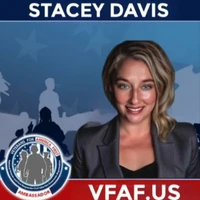
As a resident deeply concerned with the future of Beaufort County and the surrounding District. The piece written by me needs to be published to every group, organization, and publication. “Results Over Rhetoric: The Legacy Leadership Put at Risk,” explores the intersection of heirs’ property rights, heir industry and small businesses, recent legislative shifts in Raleigh, and the specific economic pressures facing our local watermen, farmers, and builders. With the 2026 primary approaching, I believe it is critical for our community to look beyond political grandstanding and examine how specific state bills—including HB 432, HB 488, and SB 266—are shifting the financial burden onto local taxpayers and heritage businesses.
RESULTS OVER REHETORIC: THE LEGACY LEADERSHIP PUT AT RISK
By: Stacey Davis, Guest Columnist
Published: https://yournews.com/2026/02/04/6387221/results-over-rehetoric-the-legacy-leadership-put-at-risk-by/
In District 79, spanning Beaufort, Dare, Hyde, and Pamlico—the debate over property tax relief is no longer just about policy; it’s about the survival of the multi-generational family legacies that define our community.
In our rural and coastal counties, land is often passed down without a formal will, becoming heir property. This can create a massive legal and financial burden for families. Because this land is owned jointly by multiple descendants, just one distant relative can force a sale of the entire family tract, often for well below market value. Without a clear title, these family-run farms and businesses often cannot qualify for USDA agricultural loans or federal disaster relief.
As property values surge, especially in Dare and Beaufort County. The tax bills on inherited land are skyrocketing. If even one heir can’t pay their share, the entire family faces a tax lien that can lead to the loss of a multi-generational business.
Representative Keith Kidwell (R-79) has championed two very different paths, and it’s time the district realized he’s jumped the fence from conservative freedom values to Bureaucratic overreach and they are on a collision course with negligence to heir property quickly becoming the lesser evil.
Current House of Representatives, Keith Kidwell, has supported North Carolina’s corporate income tax, which is scheduled to reach 0% by 2030 with an extremely costly risk. All the while, grandstands as a key figure advocating for the expansion of property tax relief for seniors and individuals with disabilities while raising income limits.
This will very possibly reduce the pool of state aid available to counties like Hyde or Pamlico predicting they will be left with “zero hidden reserves” to make up for the lost property tax revenue.
What does that leave? – rural property tax payers dependent on state welfare and unsustainable risks to local rural resources leading to underfunded local schools or slower response times for volunteer fire departments. Aurora, which is the largest employer & taxpayer in the congressional district is a prime example of how bureaucratic risks for overreach can occur under the current House of Representative leadership regarding grants he has been reported introducing to an array of officials when the tax dollars could have been better utilized all along without the wedges of division stemming from his influence causing controversy in local political organizations.
Some grants are great as seen from the Washington Waterfront, but most have the ability to turn into debt if the community fails to deliver on promised economic results. Beaufort and Dare county property tax payers are currently experiencing the responsibility for strategy – based “claw-back” revisions. For 2026, many Federal loans are structured to mature by June 30, 2030 or upon receipt from the district’s federal disaster relief. After matching funds, the revenue bonds are expected to be paid back by future user fees of the infrastructure projects. Which means, your utility costs. The general bonds are to be repaid using property tax revenues by tax increment financing.
The use of this strategy means that the “payback” for local infrastructure is shifting. With less state revenue available for rural aid, counties like Hyde (which has the second-smallest budget in the state) may be forced to raise local sales or property tax to cover the maintenance and matching costs of “free” grants as hidden payback.
The district cannot depend on the 15% of voters standing up against the machine. To become an effective part of the new property tax revolt voters must show up at the polls and ignore the grandstanding superior blocking the entrance and vote for Darren Armstrong. Armstrong promises to pause the fast development, continue progress to better serve property owners and young families, while directing better management of funds to the infrastructure that has neglected rural communities and heir industries used in Kidwell’s 0% corporate tax strategy which indirectly flushes out existing families and attracts population growth at the cost of the backs of our ancestors and current heirs.
Voting for Armstrong means agriculture remains the number one industry of North Carolina, Duke’s CWIP in SB 266 is opposed, and the freedom and liberty of District 79 communities are not forced into a lifestyle they did not choose under weaponized transparency in shadow politics with donation secrecy, but be reintroduced as the heart of a collaborated effort of organizations that will be effected the most. With that said, it’s time to pace the development so rural residents catch up.
Another five year term is too costly and one that has proven a too-fast scheme, motivating last minute votes with empty promises, and ridiculous rhetoric in scandalous behavior, is not going to save our homes or create an environment worthy of the nickname ‘Cradle of the Colony’ (District 79), where our ancestors first established the foundations of North Carolina, where multi-generational family legacies is now under threat of neglect and greed from bureaucratic overreach.
Sources:
The article “Results Over Rhetoric: The Legacy Leadership Put at Risk” by Stacey Davis, published in …. cites various legislative documents and programs. These sources include North Carolina House and Senate bills from the 2023-2026 sessions, state laws regarding corporate tax and donor secrecy, the USDA Heirs’ Property Relending Program, and a state budget provide
Stacey Davis
VFAF National Ambassador
Veterans for America First
VFAF NC State Chapter
The Original 2015 Veterans for Trump Grassroots